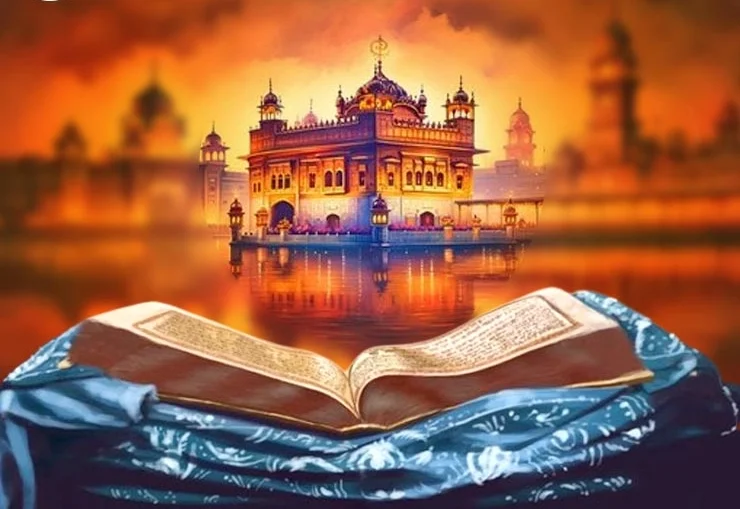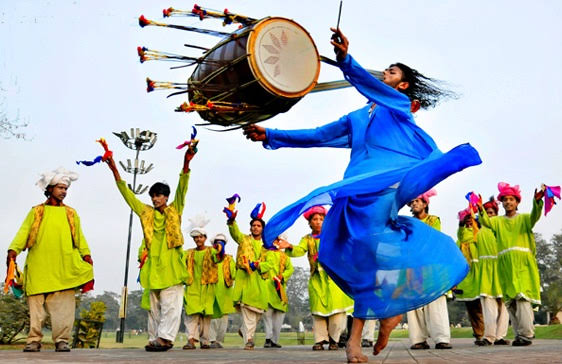
Hola Mohalla, or simply Hola, is a three-day Sikh festival that usually takes place in March. It falls on the second day of the lunar month of Chet. It is generally celebrated one day after the Hindu spring festival of Holi, although sometimes the dates coincide. Hola Mohalla is a major festival for Sikhs around the world.
Anandpur Sahib
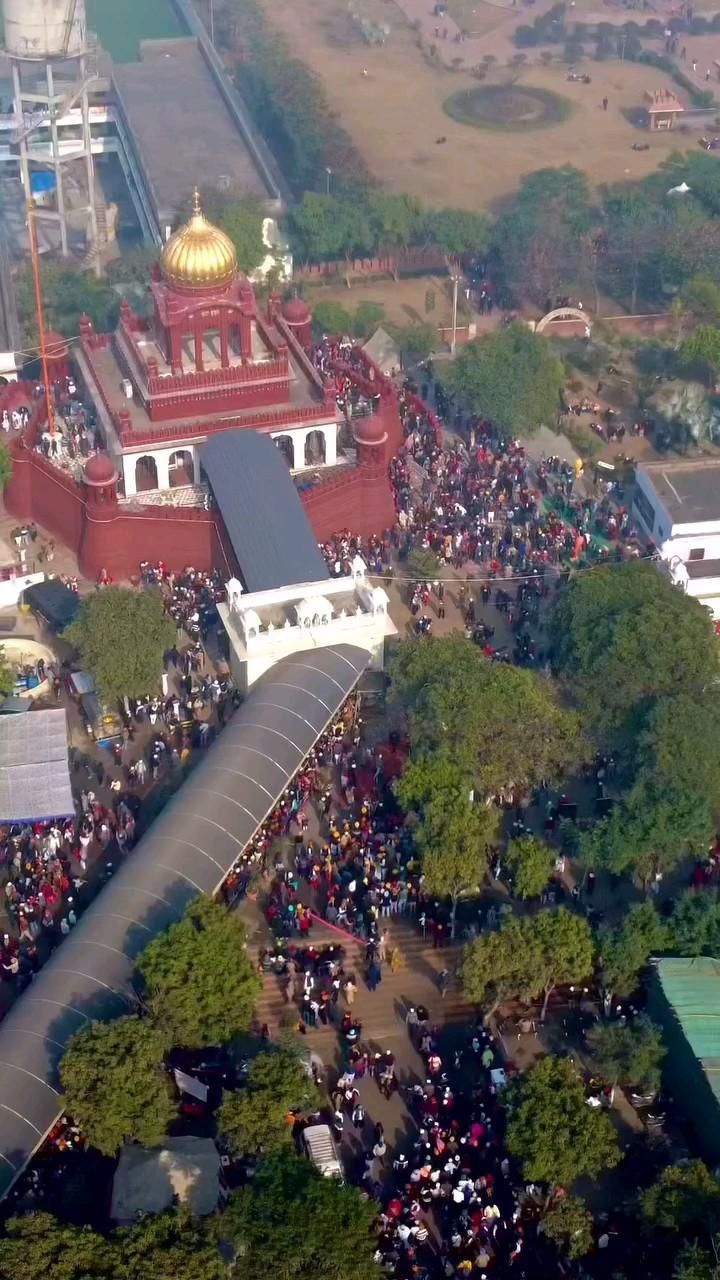
The fair held during Holi and Hola at Anandpur Sahib is traditionally a three-day event, but participants often arrive and stay for up to a week. They camp there and enjoy various displays of strength, bravery, and martial skills. Along with this, they listen to kirtan (devotional music), poetry, and spiritual discourses.
For food, which is an essential part of Sikh institutions (Gurdwaras), visitors sit together in rows (called pangat) and partake in Langar, a simple lacto-vegetarian meal served to everyone equally.
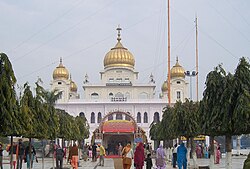
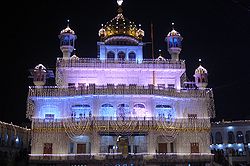
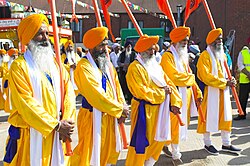
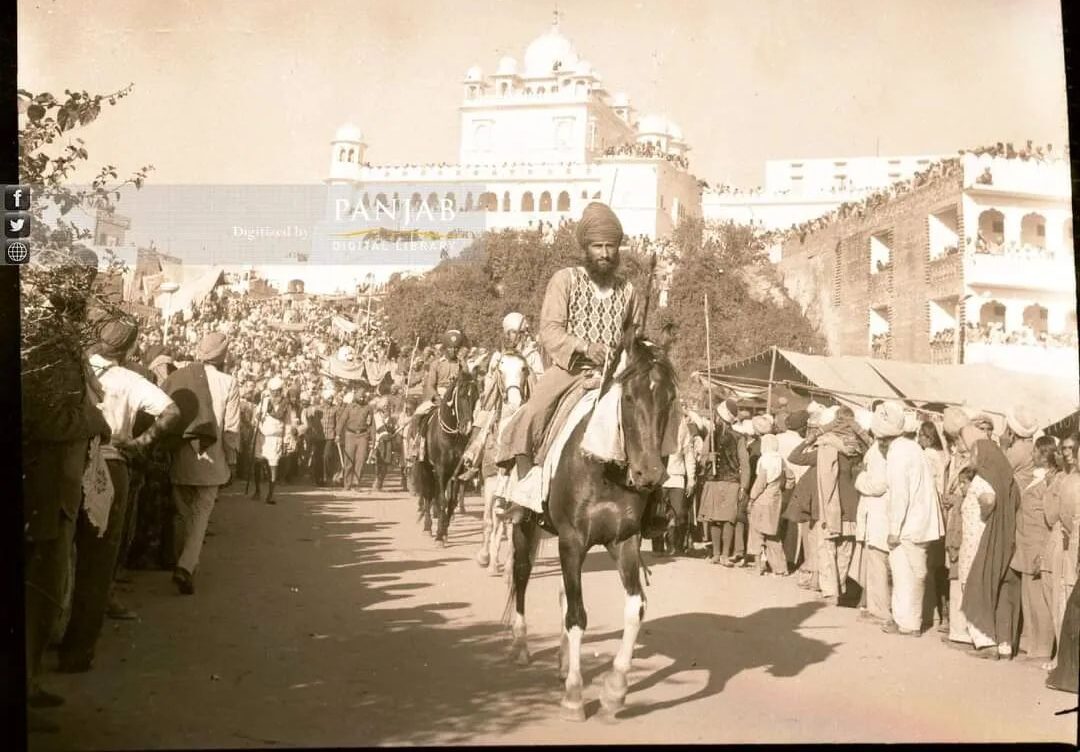
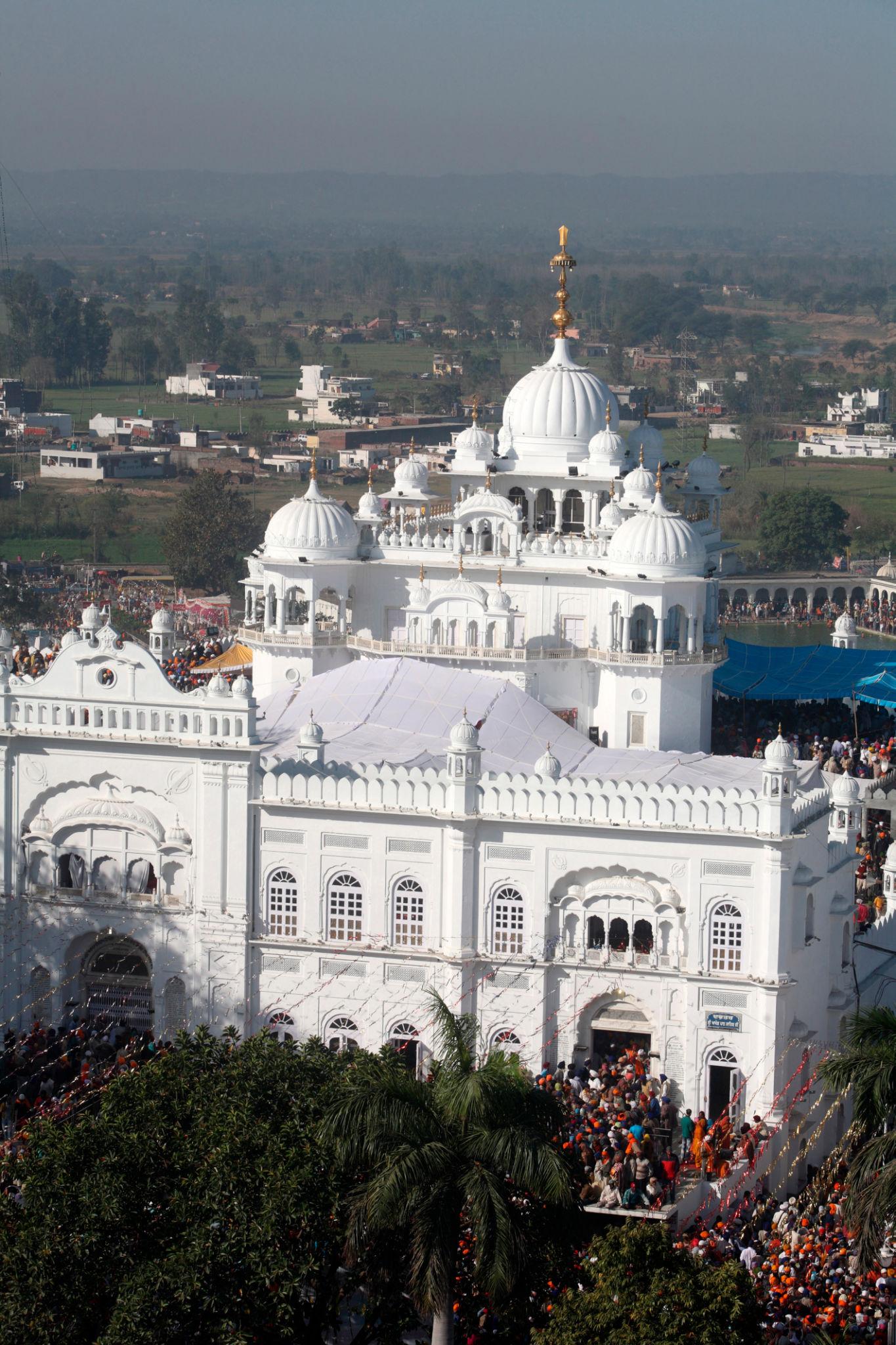
The event concludes on the day of Hola Mohalla with a long, military-style procession near Takht Kesgarh Sahib, one of the five seats of authority (known as the Panj Takht) in Sikhism.
Literal meaning
“Hola” is derived from the Arabic word “Hool”, which means to struggle for righteous deeds, to fight with one’s head on the palm (complete readiness for sacrifice), and to walk on the edge of a sword. The word “Mohalla” means a place where one settles after achieving victory.
The Tenth Guru, Guru Gobind Singh, established the Khalsa Panth to uplift the oppressed and downtrodden sections of society, helping them realize their identity and self-respect, and to instill courage and fearlessness, transforming them into brave warriors. He replaced the ritual of Charan Pahul with Khande-di-Pahul (Amrit) and introduced Hola Mohalla in place of Holi.
To inspire enthusiasm and the spirit of freedom, the Guru not only gave a new life to people but also brought revolutionary changes in Indian social customs, traditions, and ways of celebrating festivals.
According to Bhai Kahn Singh Nabha, Hola means to attack or charge. Dr. Vanajara Bedi states that “Mohalla” is derived from the Arabic word “Mahallāh”, meaning a place where one camps after victory. Initially, the term was used in this sense.
When a group took control of a place, a court (Darbar) would be held there. Displays of martial skills and military excellence were performed. Gradually, the word came to be associated with a procession. Such processions, fully armed and accompanied by the beating of drums, would move from one shrine to another in Anandpur Sahib.
The origin of the Hola Mohalla
The festival of Hola Mohalla was initiated by Guru Gobind Singh at the fort of Anandpur Sahib on Chet Vadi 1, Samvat 1757 (around 1701 AD). According to historians and scholars, the purpose of giving a new form to Holi as Hola Mohalla was to instill in Sikhs a firm resolve for the victory of truth and justice over oppression and tyranny.
Guru Gobind Singh transformed the lifeless and oppressed Indian society of that time by inspiring people to rise against cruel and unjust rulers. To awaken courage and enthusiasm among the masses, he reshaped the traditional festival of Holi and began the tradition of Hola Mohalla in 1701 AD. During this time, mock battles and martial competitions were organized between two groups of the Khalsa army. Those who performed well were honored.
Even today, Hola Mohalla is celebrated following the same traditions. Since ancient times, people in India have celebrated festivals to express their emotions with the changing seasons. The Sikh Gurus aimed to bring meaningful and spiritual transformation to these traditional festivals. They reshaped them according to Gurmat principles so that society could receive constructive guidance from them.
In Hola Mohalla, the Khalsa traditionally demonstrates martial skills using swords, spears, and lances. It represents a renewed spirit compared to the festival of Holi.
Thus, Hola Mohalla is a famous fair of Anandpur Sahib, where people gather from many places. It symbolizes human freedom, bravery, and wisdom. Guru Gobind Singh transformed Sikhs into the Khalsa, eliminating superstitions and creating a strong and united community. He removed social inequalities and divisions, and introduced Hola Mohalla as a celebration of collective strength and joy.
During the procession of Hola Mohalla, displays of martial arts are performed at the front. Guru Gobind Singh emphasized both spiritual strength and physical power, promoting the respectful and proper use of weapons. Through this transformation, the purpose and significance of Hola Mohalla in the Khalsa tradition were expressed in a highly meaningful and constructive way.
Martial Arts and Rituals
Guru Gobind Singh wanted to make the Khalsa highly skilled in the art of warfare. Therefore, he associated this festival with bravery and valor. Mohalla is a form of mock battle in which groups of armed Sikh warriors, both on foot and on horseback, are formed. They attack a designated spot and demonstrate various martial skills.
Guru Gobind Singh himself would watch these mock battles and provide necessary guidance to both groups. The victorious group was honored in the Diwan with siropaos (robes of honor). The displays of horsemanship and Gatka (traditional Sikh martial art) are especially remarkable.
On this occasion, religious gatherings (Diwans) are held, where Katha (spiritual discourse) and Kirtan (devotional singing) take place. Heroic ballads (Bir Rasa Vaaran) are sung, and various military drills are performed. An atmosphere of high spirits (Chardi Kala) prevails everywhere. Guru Sahib actively participated in all these activities and encouraged the Sikhs.
Hola Mohalla is celebrated on the sacred land of Anandpur Sahib in this form. The practice of mock battles among the Sikh warriors during this festival greatly uplifted the morale of the Indian people. People emerged from an atmosphere of fear and cowardice and began to participate enthusiastically and energetically in this celebration.
Hola Mohalla also conveys a deep message: as long as we do not participate with full strength and courage in the ongoing struggles of life, we will fall behind others. If we wish to make our lives successful, we must remember the purpose shown by Guru Gobind Singh (the “Kalgi Dhar”). We should adopt a truly active and determined way of life from Hola Mohalla and reshape our destiny anew.
Importance of Hola Mohalla at Different Places
The tradition of holding the Hola Mohalla procession, started by Guru Gobind Singh at Anandpur Sahib, continues even today. The Nihang Singhs begin the festival after offering Ardas at Takht Sri Kesgarh Sahib. Amid the sound of war drums (Nagara), the Nishan Sahib (Sikh flag) is raised. People from far and wide gather in large numbers to attend this grand fair.
At Takht Sri Hazur Sahib, Hola Mohalla processions are also held. At the front of the procession, a beautifully decorated blue horse leads, followed by the congregation. Some warriors fire shots in the air, symbolizing an attack on an enemy. The horse runs swiftly, and the devotees run behind it. This act is referred to as “Mohalla.” Such processions are mainly held at Anandpur Sahib and Hazur Sahib.
On the occasion of Hola Mohalla, a fair is also held outside Paonta Sahib Gurudwara. A large number of people from distant places participate in this gathering. This place holds great historical importance. According to Dr. Vanajara Bedi, Guru Gobind Singh stayed at Paonta Sahib for about four and a half years around 1742 Bikrami along with 52 poets. During that time, on the day of Hola Mohalla, warriors displayed their skills and poets recited their compositions.